Contactor Overload Relays
Contactor overload relays are critical safety devices within industrial electrical systems. They serve as the first line of defence for electric motors, protecting them from the damaging effects of overcurrent and prolonged overload conditions. By reliably detecting abnormal current flow and promptly disconnecting power, these robust components are essential for ensuring the longevity of machinery and maintaining operational continuity.
Contactor Overload Relays Working Principle
Contactor overload relays operate on the principle of thermal protection, specifically designed to monitor the current flowing to an electric motor. When the motor draws excessive current for an extended period, the relay’s internal heating elements or electronic circuits detect this overload condition. In thermal overload relays, this is achieved through heating of a bimetallic strip, while electronic overload relays use sensors and electronic circuits.
Upon detecting an overload, the relay’s contacts automatically trip, opening the control circuit of the motor starter and thereby disconnecting power to the motor. This swift and automatic disconnection prevents the motor from overheating and suffering irreversible damage.
Some overload relays also incorporate adjustable trip settings and time delays to tailor the protection to specific motor characteristics and operational requirements.
Types of Contactor Overload Relays
Contactor overload relays are broadly classified into two main types, distinguished by their detection mechanism: thermal and electronic. Each type offers distinct characteristics suitable for various applications and levels of protection.
Thermal Overload Relays
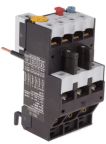
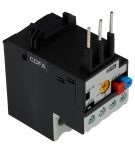
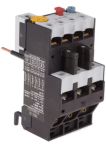
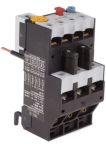
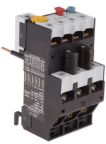
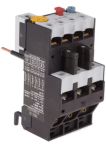
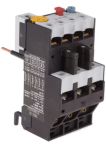
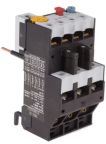
Thermal overload relays utilise a bimetallic strip or heating elements that are directly influenced by the motor’s current. As the current increases due to an overload, these elements heat up, causing a bimetallic strip to bend. This bending action mechanically trips the relay’s contacts, interrupting the motor’s control circuit. These relays are reliable, cost-effective, and provide time-delayed protection that mimics the heating characteristics of the motor itself.
Key characteristics:
- Time-delayed protection that mimics motor winding temperature rise.
- Simple, rugged, and cost-effective design.
- Adjustable current range and reset options (manual or automatic).
- Reliable performance in a wide range of industrial environments.
Electronic Overload Relays/Solid-State Overload Relays
Electronic overload relays, also known as solid-state overload relays, offer more precise and advanced motor protection. They use current transformers and electronic circuits to continuously monitor the motor’s current. These relays can detect a wider range of fault conditions, including phase loss, phase imbalance, and ground faults, in addition to overloads. Their solid-state nature provides faster response times, higher accuracy, and often includes features like fault diagnostics and communication capabilities. Electronic overload relays are preferred in complex or critical applications requiring precise motor protection and integration into automated control networks.
Overload Relay Contact States: Normally Open (NO) and Normally Closed (NC)
Contactor overload relays incorporate auxiliary contacts. These help control and indicate a motor's operating status. Understanding the differences between Normally Open (NO) and Normally Closed (NC) contacts is important for correct wiring, system integration, and troubleshooting
- Normally Closed (NC) Contacts: NC contacts remain closed during normal motor operation and allow current to flow through the control circuit. When an overload or fault is detected, the relay trips. That action causes the NC contacts to open, interrupting the motor’s control circuit. Power is cut, protecting the motor from damage.
- Normally Open (NO) Contacts: In contrast, NO contacts are open under normal operating conditions. They close only when the relay trips due to an overload. One commonly uses these contacts to trigger external alarms, indicators, or supervisory control systems to signal a fault condition. NO contacts provide visible or remote notification without interrupting the main motor control circuit.
Industrial Applications of Contactor Overload Relays
Motor Starters for Industrial Machinery
Contactor overload relays are integral components within motor starters for virtually all types of industrial machinery, from lathes and milling machines to presses and mixers. They protect the motor from damage if it draws excessive current due to a mechanical jam, bearing failure, or other overload conditions, thus preventing costly repairs and downtime.
Pumps and Pumping Systems
In water treatment plants, irrigation systems, and chemical processing facilities, overload relays safeguard motors driving pumps. They ensure that pumps operate within safe current limits, protecting them from damage caused by blockages, dry running, or mechanical issues, which is critical for maintaining fluid flow and system integrity.
Fans and Blowers
Fans and blowers, essential for ventilation, air circulation, and material conveying in industrial settings, rely on overload relays to protect their motors. These relays prevent motor burnout if the fan blades become obstructed or if there is an unexpected increase in air pressure, ensuring consistent airflow and operational safety.
Conveyor Systems
Conveyor systems, prevalent in manufacturing, logistics, and mining, utilise overload relays to protect the motors responsible for moving materials. The relays guard against damage if the conveyor belt jams or if there is an excessive load, ensuring smooth material flow and preventing operational bottlenecks.
Compressors
Compressors, vital for pneumatic systems and refrigeration, use overload relays to protect their high-power motors. These relays ensure the motor is not overloaded due to high pressure, low refrigerant levels, or mechanical issues, maintaining consistent air or gas supply and extending compressor lifespan.
Automated Control Panels and Motor Control Centres
Contactor overload relays are housed within automated control panels and Motor Control Centres (MCCs). Their integration here allows for centralised protection and control of multiple motors, facilitating organised wiring, easier troubleshooting, and systematic management of complex industrial processes.
Key Features and Practical Considerations
- Adjustable Trip Settings: Many overload relays allow users to set current trip thresholds and time delays to match specific motor ratings and operational profiles. Such adjustability ensures precise motor protection tailored to varying load conditions.
- Manual and Automatic Reset: Thermal overload relays often feature manual reset to require operator intervention after a trip. In contrast, electronic relays provide auto-reset or remote reset options, offering greater operational flexibility.
- Communication and Diagnostics: Advanced electronic relays can interface with industrial networks, providing real-time status updates, fault diagnoses, and logging to support predictive maintenance. Communication capabilities enhance contactor system monitoring and troubleshooting efficiency.
- Mounting and Compatibility: Ensure relay compatibility with the contactor size and motor control equipment for seamless integration. Proper mounting simplifies installation and ensures the overload relay functions correctly within the control panel.
- Standards Compliance: Choose devices compliant with IEC, UL, and other relevant standards to ensure safety, reliability, and regulatory adherence.
How to Choose the Right Contactor Overload Relay
Selecting the appropriate contactor overload relay is crucial to ensuring effective motor protection and system reliability. Several key factors should guide your decision:
- Motor Current Rating: Choose an overload relay that accommodates the full-load current of your motor. The relay’s adjustable current range should cover your motor’s rated current to provide accurate and timely protection without nuisance tripping.
- Type of Relay: Decide between thermal and electronic types based on your application needs and budget. Thermal overload relays are generally well-suited for straightforward, cost-sensitive applications. They offer robust, reliable protection. Electronic (solid-state) relays provide advanced features like faster response, phase failure detection, and integration capabilities, ideal for complex or critical environments.
- Application Environment: Consider the conditions where the relay will operate. Environments with high dust, moisture, temperature fluctuations, or vibration might require devices constructed with enhanced durability and ingress protection to maintain reliability over time, ensuring overload prevention.
- Trip Class and Time Delay Settings: Different motors and application scenarios call for varied protection response speeds. Trip classes determine how quickly the relay responds to overloads. Selecting a trip class compatible with your motor’s starting characteristics (such as locked rotor or fan motors) ensures the relay neither trips prematurely nor reacts too slowly.
- Additional Protection Features: Evaluate whether you need overload relays that also detect other motor faults, such as phase loss (single-phasing), phase imbalance, ground faults, or locked rotor conditions. Advanced electronic relays often include these capabilities, which can prevent premature motor failure and support preventive maintenance.
- Mounting Compatibility: Confirm that the relay’s size, mounting style, and ratings are compatible with your existing contactors and motor control equipment. Ensuring proper compatibility leads to a seamless and safe installation without requiring additional modifications.
Your Trusted Partner for Motor Protection Solutions
Ensuring the reliable and safe operation of industrial motors is paramount for any business. RS Singaporeis a trusted supplier and distributor of contactor overload relays, offering a comprehensive range of high-quality solutions to protect your valuable machinery. We partner with industry leaders like Schneider Electric, Siemens, and ABB, guaranteeing access to robust, precise, and dependable motor protection devices.
Our extensive inventory is designed to meet not just diverse application requirements and industry standards, but also to provide a competitive price point. Beyond overload relays, we also provide other essential electrical components to complete your control systems, including power distribution units for efficient power management and electrical adapters for versatile connectivity.
For seamless procurement and efficient project execution, RS offers a streamlined online ordering process. Explore our range and discover how easy it is to enhance your motor protection. For more information regarding our delivery options and policies, please refer to our dedicated delivery page.

Popular Searches
Related links
- Siemens SIRIUS 3RU2 Thermal Overload Relay 1NC/1NO 3 A Contact Rating 3P, SIRIUS
- Lovato RF38 Thermal Overload Relay 25 A Contact Rating, 3P
- Lovato RF38 Thermal Overload Relay 630 mA Contact Rating, 3P
- Omron Thermal Overload Relay 14 A Contact Rating, 15 kW
- Schneider Electric LRD Thermal Overload Relay 25 A Contact Rating, TeSys
- Omron Thermal Overload Relay 600 mA Contact Rating
- Omron Thermal Overload Relay 600 mA Contact Rating, 15 kW
- Schneider Electric Thermal Overload Relay 9 < 13 A Contact Rating TeSys