Cable Markers
Cable markers are fundamental for systematic wire management in industrial environments. They provide a standardised method for identifying conductors, cables, and conduits, conveying critical data like voltage rating and circuit origin. This facilitates rapid fault-finding, maintenance, and regulatory compliance. Manufactured from materials designed to withstand environmental conditions ranging from indoor to harsh outdoor or industrial settings, cable markers ensure legible, lasting identification throughout the system's lifecycle.
Benefits of Using Cable Markers
- Operational Efficiency: Speeds troubleshooting, maintenance, and upgrades by enabling immediate cable identification, reducing downtime and errors.
- Safety Enhancement: Proper labelling helps prevent incorrect disconnections or tampering, thereby reducing electrical hazards and enhancing workplace safety.
- Regulatory Compliance: Ensures your installations meet international and regional standards such as BS 7671, IEC 61346, and IEC 61439-1 for electrical system and machinery safety.
- System Reliability: Maintains clear circuit tracing for accurate isolation and continuity during maintenance.
- Long-Term Durability: Made from industrial-grade materials, these markers are engineered to resist abrasion, chemicals, moisture, UV exposure, and extreme temperatures. This ensures that identification remains clear and legible throughout the asset's entire lifecycle, eliminating the risk of unidentifiable cables in the future.
- Cost Savings: Reduces costs by preventing cable damage, operational delays, and accidental disconnections.
- Flexibility: Wide options for different cable types, environments, and installation stages support diverse industrial needs.
Types of Cable and Wire Markers
The selection of a cable marker is dictated by the application's environmental conditions, the permanence required, and the cable's physical characteristics. Different marker types employ distinct materials and application methods to meet specific industrial demands for durability, legibility, and ease of installation.
Heat-Shrink Labels
Constructed from polyolefin or similar thermoplastic materials such as heat shrink tubing, these sleeves are fitted over a cable and then heated. The thermal application causes the sleeve to shrink and conform tightly to the cable jacket, creating a permanent, highly durable marker that offers excellent resistance to abrasion, chemicals, and extreme temperatures.
Non-Shrink Labels
Typically made from industrial-grade vinyl or polyester with an aggressive adhesive backing, these labels are applied without heat. They are ideal for terminating connections in controlled environments like data centres or control panels, where frequent changes may be necessary and a permanent bond is not required.
Self-Laminating Labels
These markers feature a printable, opaque area for identification data and a clear, translucent adhesive tail. After application, the clear tail wraps over the printed section, creating an integrated laminate that shields the text from moisture, solvents, UV exposure, and physical wear — a function also seen in advanced forms of electrical insulation tapes used in wire identification.
Wrap-Around Labels
Designed for 360-degree visibility, these adhesive markers wrap completely around the conductor. This format ensures that the identification code is viewable from any angle, which is critical in densely packed enclosures or complex cable trays where access is restricted.
Printable Sleeves
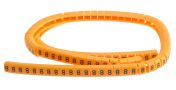
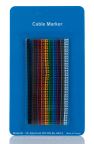
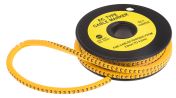
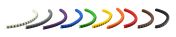
These are non-adhesive, hollow tubes that are printed with identification data and then slid onto a wire or cable prior to termination. Secured by the terminated connector or cable ties, they offer a flexible and cost-effective solution for large-scale wire harnessing and assembly.
Tag Labels (Tie-On)
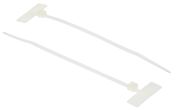
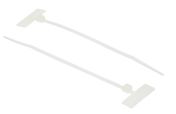
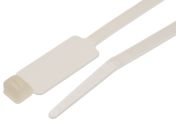
Affixed using cable ties, these rigid tags are suited for identifying large-diameter cables or bundles of conductors where direct application of a label is impractical. They provide a large surface area for detailed information and are often made from materials engineered for harsh outdoor or industrial conditions.
BAND-IT Cable Markers
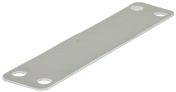
These are high-durability markers, often fabricated from embossed stainless steel (Grade 316), and are affixed using a stainless steel banding system. This type is specified for extreme environments involving high temperatures, corrosive materials, or prolonged UV exposure, such as in marine, offshore oil and gas, or heavy industrial settings.
Applications of Wire Label Marker
Effective cable marking is a mission-critical practice across industries, underpinning operational safety, reliability, and maintenance. The marker technology selected must meet the unique environmental and regulatory requirements of each sector.
Telecommunication
In high-density environments like data centres, clear identification of fibre and copper cabling is essential for network uptime. Self-laminating labels are specified to protect identifiers from moisture and handling. For external plant cabling, markers must offer superior UV and moisture resistance to ensure long-term legibility.
Electrical
In industrial electrical systems, cable markers identify a specific circuit or feeder allocation, distinct from a label showing a cable's path. This is crucial for rapid and safe circuit isolation during maintenance or fault diagnosis. Properly marked conductors mitigate electrical risks and ensure compliance with standards like BS 7671.
Automotive
Automotive wire harnesses operate in environments with constant vibration, temperature fluctuations, and exposure to fluids. Markers must be exceptionally durable, often using heat-shrink technology for a secure, abrasion-resistant fit. Clear circuit identification is vital for assembly, diagnostics, and reliability of critical systems like ECUs.
Aerospace
The aerospace industry mandates the highest standards for component identification due to extreme operational conditions and stringent safety regulations. Wire markers must be manufactured from materials that are flame-retardant, low-outgassing, and resistant to aerospace fluids. They convey critical information such as wire type, size, and specification, ensuring traceability and correctness in flight-critical systems where component failure is not an option.
Healthcare
In medical facilities, precise cable identification is paramount for patient safety and equipment reliability. Markers are used to distinguish connections for life support systems, diagnostic imaging equipment, and patient monitoring devices. This prevents connection errors during equipment setup or emergency maintenance. The materials used for these markers must often withstand frequent cleaning and sterilisation with aggressive chemical agents without compromising legibility.
How to Choose Cable Markers
Proper marker selection depends on several criteria:
- Environmental Conditions: Assess resistance needed against temperature, chemicals, moisture, UV, abrasion, and vibration. Select materials like stainless steel for maximum durability or halogen-free polyolefin for enclosed spaces where safety is paramount.
- Cable Diameter: Marker size should allow snug fitting without impeding installation or cable integrity.
- Permanence: Choose heat-shrink or BAND-IT for permanent ID; adhesive or tag labels for semi-permanent or flexible use.
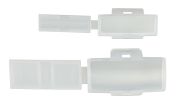
- Installation Stage: Consider when the marker will be applied. Slide-on sleeves must be fitted before the cable is terminated. For existing installations or maintenance work, clip-on markers, tie-on tags, or wrap-around labels are the ideal choice as they can be applied at any time.
- Material Compatibility: Ensure marker adhesion or fit complements the cable jacket material.
- Legibility and Print Method: Match marker type to printing options (manual, thermal transfer, laser) ensuring contrast and readability.
- Regulatory Compliance: Conform to relevant standards like IEC 81346-1, IEC 61439, UL or CSA certifications.
The Leading Supplier and Distributor of Cable Markers in Singapore
RS is your trusted distributor for high-performance cable markers. We offer a comprehensive portfolio from industry-leading manufacturers such as HellermannTyton, Phoenix Contact, and Legrand. Our inventory covers a wide array of types, materials, and sizes at competitive prices, ensuring you can source the ideal cable identification solution for any industrial application.
To complete your wire management systems, we also stock essential accessories like cable ties and crimping tools. Shop for your heat-shrink sleeves, self-laminating labels, clip-on markers, and other identification products online today. For more information on our ordering, shipping options, and delivery fees, please visit our delivery information page.

Popular Searches
Related links
- Cable Marker Accessories
- Relay Labels
- HellermannTyton White White Print Cable Labels 190 Per Pack Qty, 65 mm
- Brady Heatex Cable Tie Cable Labels Pre-printed "0 = Print gone 2 = Moderate fading, 3 =
- Partex Marking Systems PA Adhesive Cable Marker, MD10/PA YELLOW 25 (1) UL 94 V-0
- RS PRO EP Slide-On Cable Marker Kit - T L N R" 2 mm Cable
- HellermannTyton Cable Marking Pen for Helasign Arrowtags, Rite-On
- Schneider Electric AR1 Clip Tag Cable Marker Pre-printed "J" Yellow, AR1MB01J