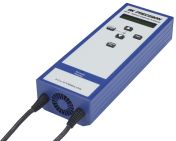
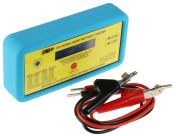
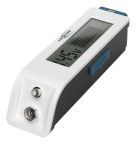
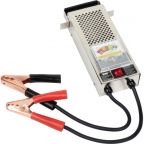
Battery Testers
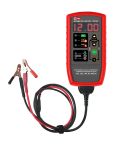
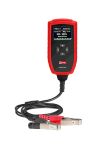
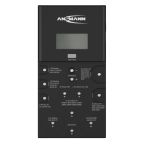
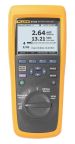
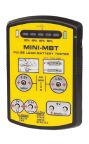
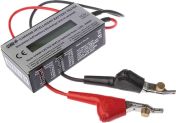
Battery testers, sometimes called voltage meters, are electronic instruments used to assess the health and performance of a wide variety of batteries. They determine whether batteries are functioning correctly and, for rechargeable cells, verify that they are retaining charge effectively. Battery testers are designed to provide clear, easy-to-interpret readouts, allowing users to quickly confirm battery power and operational reliability.
Battery testers operate by measuring voltage, internal resistance, or conductance under controlled conditions, providing diagnostic data that helps distinguish between temporary surface charge, genuine capacity loss, or imminent failure.
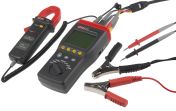
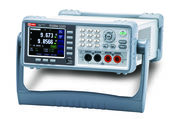
At RS Singapore, we supply battery testers in multiple form factors and technologies, including benchtop and portable devices, covering a range of chemistries such as lead-acid, Li-ion, NiCd, and NiMH. Our range supports applications from routine maintenance to high-precision industrial diagnostics.
Benefits of Using Battery Testers
Battery testers are widely used in Singapore to ensure optimal battery health for a large range of important machines and appliances. These are some of the benefits of using a battery tester machine or battery test tool regularly as part of a maintenance routine:
- Accurate Battery Health Assessment: Identify degraded or failing cells before they affect system performance or safety.
- Predictive Maintenance Support: Early detection of weak batteries enables planned replacements, reducing unplanned downtime and operational disruption.
- Versatile Diagnostics: Modern battery testers measure voltage, CCA, internal resistance, and conductance for comprehensive battery analysis.
- Reduced Operational Risk: Ensures critical equipment, from vehicles to medical devices, operates reliably under expected load conditions.
- Optimised Battery Lifecycle: Regular monitoring helps extend battery service life by preventing deep discharge and overuse.
Types of Battery Test Tools
The selection of a battery testing instrument depends heavily on the battery chemistry, voltage rating, and the required precision of the diagnostic data. Modern industrial tools range from simple voltage indicators to advanced systems that measure internal resistance or conductance and estimate remaining useful life. Selecting the appropriate technology ensures that maintenance teams can distinguish between a temporary surface charge and a genuine loss of capacity.
By Display Type
- Digital Battery Tester: These units utilise liquid crystal displays (LCD) or light-emitting diodes (LED) screens to provide high-resolution numerical readouts of voltage, current, and internal resistance. Many models include microprocessors for automated data logging and tolerance checks against manufacturer specifications, offering precise battery diagnostics.
- Analogue Battery Tester: Analogue testers employ a moving-coil galvanometer with a calibrated scale to indicate battery condition. They provide immediate visual feedback, require no internal power, and are often used for quick trend monitoring or basic load tests. These units are typically robust and simple to operate in field environments.
By Technology
- Load Testers: A load tester applies a calibrated resistive load to the battery, simulating real-world operating conditions. By measuring the voltage drop under load, they assess a battery's ability to deliver high cranking amps (CCA) or sustained power, making them ideal for automotive and heavy-duty applications.
- Electronic Testers: Also known as conductance testers, these devices send a low-frequency AC signal through the battery to measure the effective plate surface area available for chemical reaction. They are highly efficient for testing batteries in situ, as they do not require a full discharge and generate minimal heat during the diagnostic process, making them suitable for frequent maintenance checks.
- Impedance Testers: Impedance testers measure the internal resistance of a cell by applying an AC current at specific frequencies, providing a detailed map of the battery's internal health. This is a critical metric for detecting sulphation, dry-out, or plate degradation in stationary valve-regulated lead-acid (VRLA) and lithium-ion systems.
Key Specifications to Consider When Selecting a Battery Tester
Battery testers in Singapore come in a wide range of tools and machines. Consider these factors in order to choose the right one for your testing needs:
- Battery Chemistry Compatibility: Ensure the battery tester is compatible with the target battery type, such as lead-acid, Li-ion, NiCd, or NiMH, to obtain accurate measurements.
- Measurement Parameters: Choose devices that measure voltage, CCA, internal resistance, or conductance depending on your application and diagnostic requirements.
- Display Type and Interface: A battery test tool or machine with digital displays offer precise readouts and data logging capabilities, while analogue meters provide rapid trend visualisation without requiring a power source.
- Load Capacity: For load testers, confirm the device can safely apply the required resistive load corresponding to the battery’s rated capacity.
- Portability vs Benchtop: Portable battery test tools are convenient for field diagnostics, whereas benchtop battery test machines offer advanced analytics for lab or workshop use.
- Standards Compliance: Look for testers compliant with ISO, IEC, or SAE testing standards to ensure consistent and reliable results.
Applications of Battery Testers
The deployment of battery testers spans across diverse industrial sectors, where power reliability is directly correlated to operational safety and economic throughput. By implementing routine diagnostic protocols, technicians can identify individual cell divergence within a string before it leads to a systemic failure or thermal runaway.
Transportation and Automotive
In the automotive and heavy transport sectors, testers are used to verify Cold Cranking Amps (CCA) and the efficiency of the charging system's alternator. They are equally critical for the high-voltage battery modules found in Electric Vehicles (EVs), where cell balancing and thermal management must be monitored with high precision.
Consumer Electronics
Battery testers in this segment focus on the lifecycle management of Lithium-Polymer (LiPo) and Lithium-Ion (Li-ion) cells used in mobile devices and portable power tools. Engineers use these tools to calibrate battery management systems (BMS) and ensure that capacity degradation remains within acceptable consumer-facing tolerances.
Energy and Utility Sector
Within grid storage and renewable energy installations, battery testing machines monitor the massive battery banks used for frequency regulation and peak shaving. These tools facilitate the identification of high-resistance links or failing cells within long series strings, preventing downtime in critical energy distribution networks.
Healthcare and Medical Devices
The medical sector relies on battery testers to certify the reliability of life-support equipment, such as defibrillators, infusion pumps, and ventilators. Regular testing ensures that internal backup batteries meet stringent regulatory standards for emergency run-times during mains power oscillations.
Robotics and Manufacturing
In automated warehouses and smart factories, battery tester machines are used to maintain the fleets of Autonomous Guided Vehicles (AGVs) and robotic arms. By monitoring the discharge profiles of these units, maintenance teams can optimise charging cycles and schedule battery replacements during planned downtime to maintain peak throughput.
The Leading Supplier and Distributor of Battery Testers in Singapore
RS serves as a premier source for high-precision battery diagnostic instrumentation across Singapore. We maintain a comprehensive inventory from industry-leading manufacturers, including Ansmann, Fluke, and our own RS PRO line, providing engineers with the accuracy required for critical power assessments. Our selection spans various architectures and measurement capacities at competitive price points, ensuring you find the optimal industrial battery capacity tester for your specific infrastructure requirements.
To facilitate comprehensive maintenance and repair operations, we also supply essential auxiliary components, such as high-performance lead acid battery units for standby power and high-specification multimeter test leads for precise signal acquisition. Purchase your benchtop battery testers, portable battery testers, and integrated battery management accessories online today. For further technical details on our procurement pathways, shipping schedules, and regional distribution fees, please refer to our delivery services page.