Vibration Sensors
A vibration sensor quantifies the magnitude and frequency of mechanical oscillations in machinery for condition-based monitoring. These sensors provide critical data for predictive maintenance and IIoT applications, from overall vibration levels indicating asset stress to advanced diagnostics that distinguish component-specific signatures. These signatures are correlated to failure modes like bearing defects, looseness, imbalance, and shaft misalignment for precise fault diagnosis and timely intervention.
By measuring key parameters like displacement, velocity, and acceleration, vibration sensors provide the rich data needed to diagnose specific fault types in any machinery. When integrated with analysis software, these sensors become the core of a proactive maintenance system, facilitating real-time alerts and performance trending.
Benefits of Vibration Sensors
- Early Fault Detection: Detect potential equipment failures, allowing you to schedule repairs before they cause catastrophic breakdowns and costly operational halts.
- Extended Equipment Life: Enable timely maintenance interventions that extend asset lifespan.
- Improved Safety: Monitor critical assets to prevent hazardous failures in sensitive environments.
- Increased Efficiency: Reduce maintenance costs and optimise resource allocation by transitioning from reactive to predictive maintenance strategies.
- Quality Control: Maintain product quality through precise monitoring of vibration-related variables in manufacturing.
- Regulatory Compliance: Support adherence to safety and environmental regulations requiring equipment condition monitoring.
Working Principle of a Vibration Detection Device
Vibration detection sensors capture dynamic data primarily through an internal accelerometer. The most prevalent technology for industrial applications is the piezoelectric crystal. When the machinery under test vibrates, it subjects the crystal to mechanical stress. This stress induces a proportional electrical charge, generating a voltage signal that precisely mirrors the equipment's vibration characteristics. Vibration analysis software then processes this signal, performing a Fast Fourier Transform (FFT) to deconstruct it into its constituent frequencies and amplitudes for detailed analysis.
Types of Vibration Monitoring Sensors
Accelerometers
Accelerometers measure the rate of change of velocity (acceleration) along a specific axis, providing a proportional voltage or digital signal. Their versatility, wide frequency range, and various configurations (piezoelectric, piezoresistive, MEMS) make them the most common sensor type for industrial condition monitoring.
Handheld Vibration Analysers
These portable instruments integrate a sensor with a data collector (like data loggers) for route-based data collection and on-the-spot diagnostics. They are essential tools for troubleshooting, commissioning, and performing periodic checks on assets without permanent monitoring systems.
Eddy Current / Capacitive Displacement Sensors
These non-contact proximity sensors measure the displacement of a target relative to the sensor. Eddy current sensors use a magnetic field on a conductive target, while capacitive sensors measure capacitance changes. They are primarily used to monitor shaft position and vibration within fluid-film bearings, common in turbines and compressors.
Laser Displacement Sensors
Utilising a focused laser beam, these non-contact sensors measure displacement with extremely high resolution and accuracy. They are ideal for applications requiring precise measurements without physical contact, such as monitoring delicate components, high-temperature surfaces, or assets where mounting a traditional sensor is impractical.
Strain Gauges
A strain gauge measures vibration by detecting the minute deformation (strain) on a component's surface. As the component vibrates, the gauge, which is bonded to it, stretches or compresses, causing a change in its electrical resistance. This change is directly proportional to the strain and can be correlated to vibration, making it useful for structural health monitoring.
Microphones
Acoustic sensors detect airborne sound pressure waves generated by machinery. They are used for non-contact analysis, as faults like leaks, cavitation, or high-frequency bearing defects produce distinct acoustic signatures that can be captured and diagnosed.
Gyroscopes (MEMS)
MEMS gyroscopes are inertial sensors that measure angular velocity. In vibration analysis, they detect rotational or torsional vibration, a critical parameter in drivetrains and crankshafts where twisting forces can cause fatigue failure.
Piezoelectric Vibration Sensor
These sensors use the piezoelectric effect to convert pressure, acceleration, or force into an electrical charge. Most high-performance industrial accelerometers are piezoelectric, valued for their robustness, high sensitivity, wide frequency response, and linearity.
Applications of Industrial Vibration Sensors
General-Purpose Machine Monitoring
Essential for predictive maintenance of rotating equipment like pumps, motors, and gearboxes. For example, a vibration sensor installed on a motor can provide early warnings of faults, enabling planned interventions to prevent failures and minimise downtime.
Manufacturing and Automation
In manufacturing, sensors monitor CNC machines, robots, and conveyors. Controlling vibration is critical for machine accuracy, product quality, and maximising the life of automated systems.
Oil and Gas, Petrochemical, and Power Generation
In these critical sectors, sensors monitor high-value assets like turbines, compressors, and generators. Vibration monitoring is essential for operational safety, regulatory compliance, and ensuring reliable operation in hazardous environments.
Building Services and Infrastructure
Vibration analysis is applied to building HVAC systems, chillers, elevators, and escalators to ensure occupant comfort and operational efficiency. It is also used in structural health monitoring (SHM) for bridges, tunnels, and large buildings to assess structural integrity and detect degradation over time.
Food and Beverage Processing
Sensors monitor mixers, centrifuges, and packaging machinery in sanitary environments. This prevents failures that could cause contamination, ensuring product quality and maintaining high throughput.
Mining and Heavy Industry
Deployed on large-scale machinery like crushers, mills, and conveyors. In these harsh conditions, monitoring is critical for protecting assets from premature failure and ensuring personnel safety.
Water and Wastewater Treatment
In municipal and industrial water treatment facilities, vibration sensors monitor the health of essential assets like pumps, blowers, aerators, and centrifuges. This ensures the reliability of critical processes, optimises energy consumption, and prevents service disruptions.
How to Choose the Right Vibration Sensor
Choosing an appropriate vibration sensor is critical to obtaining accurate data and effective condition monitoring. Key factors to consider include:
- Measurement Type: Align your choice with your diagnostic goals. As a general rule, use acceleration for high-frequency faults (bearings, gear mesh), velocity for mid-frequency analysis (overall machine health, imbalance), and displacement for low-frequency issues (structural movement, low-RPM shafts).
- Frequency Range: Make sure the sensor covers the frequency range of your equipment. Slow machines require low-frequency sensors, while high-speed machinery may need higher-frequency capability.
- Sensitivity and Resolution: Higher sensitivity detects subtle vibrations and improves data quality but may reduce frequency range; balance according to application needs.
- Environmental Conditions: The sensor must be built to survive its operating environment. Look for key specifications like a high IP rating (e.g., IP68) for dust and moisture protection, a wide operating temperature range, and hermetic sealing for corrosive areas. Features like stainless steel housings and ruggedised connectors are non-negotiable for most industrial installations.
- Mechanical Constraints: The sensor’s size, mounting type (side or top exit), and weight should match space and installation conditions without affecting measurement accuracy.
- Signal Output: Match the sensor’s output with your monitoring system. Options include 4–20 mA for simple plant monitoring or ICP®/IEPE for detailed vibration analysis.
The Leading Supplier and Distributor of Vibration Sensors in Singapore
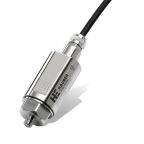
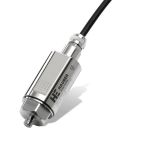
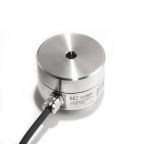
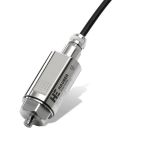
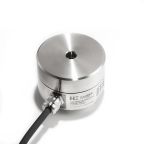
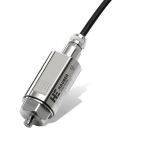
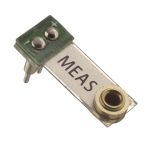
RS is your trusted partner for high-performance vibration sensors. We offer a comprehensive selection from industry-leading manufacturers such as Hauber Elektronik, TE Connectivity, and Assemtech. Our inventory covers various sensing technologies and configurations at competitive prices, ensuring you can source the ideal vibration sensor for your specific industrial application.
We also provide a full range of related condition monitoring equipment, including industrial connectors and signal conditioners, to complete your predictive maintenance systems. Order your piezoelectric accelerometers, industrial MEMS sensors, handheld vibration analysers, and other monitoring accessories online today. For complete details on our ordering options, shipping services, and any applicable delivery fees, please visit our delivery information page.
Popular Searches
Related links
- TE Connectivity Vibration Sensor 30V Max +5°C → +60°C
- TE Connectivity Vibration Sensor, 90 μA Max → +85°C
- TE Connectivity Vibration Sensor, 0°C → +70°C
- Monitran Vibration Sensor 32V Max, -25°C → +90°C
- KEMET Vibration Sensor 600 μA Max -25°C → +85°C
- RS PRO Vibration Sensor 28V Max -40°C → +120°C
- KEMET Vibration Sensor 450 μA Max -25°C → +85°C
- Hauber Elektronik Vibration Sensor 20 mA Max -40°C → +85°C