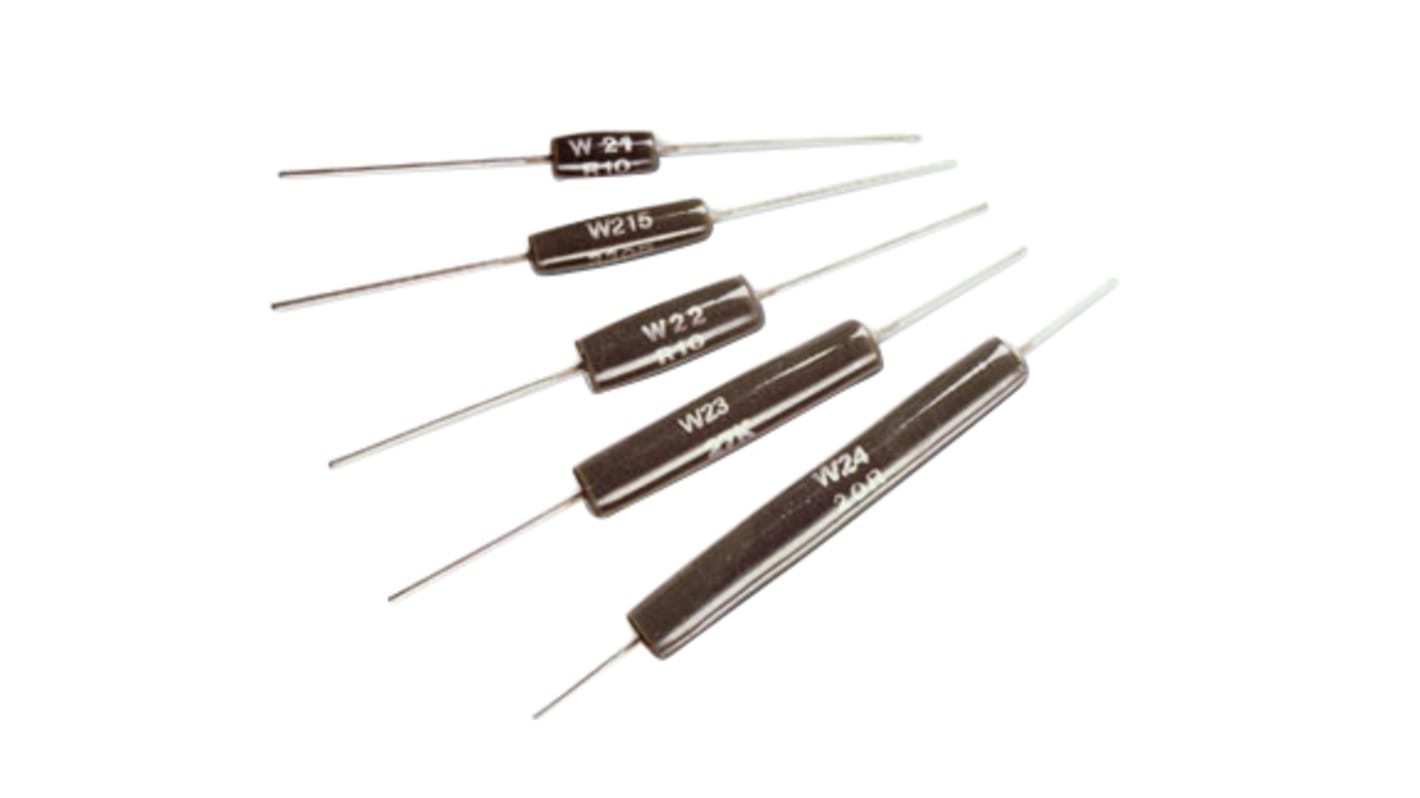
Welwyn 220 Ω Wirewound Resistor 3 W 5 %

This image is representative of the product range

Bulk discount available

Subtotal (1 bag of 5 units)*

SGD8.73

(exc. GST)

SGD9.515

(inc. GST)

Add to Basket
Select or type quantity
In Stock
  • 660 unit(s) ready to ship from another location
  • Plus 16,300 unit(s) shipping from 18 February 2026
Need more? Click ‘Check delivery dates’ to find extra stock and lead times.
Units
Per unit
Per Bag*
5 - 95SGD1.746SGD8.73
100 - 245SGD1.686SGD8.43
250 - 495SGD1.598SGD7.99
500 +SGD1.518SGD7.59

*price indicative

RS Stock No.:
139-3433
Mfr. Part No.:
W21-220RJI
Manufacturer:
Welwyn
Find similar products by selecting one or more attributes.
Select all

Brand

Welwyn

Resistance

220Ω

Product Type

Resistor

Power Rating

3W

Resistor Type

Wirewound

Packaging

Ammo Pack

Tolerance ±

5%

Axial/Radial

Axial

Voltage

100 V

Technology

Wirewound

Series

W20

Automotive Standard

No

Package/Case

1000

Minimum Operating Temperature

-55°C

Maximum Operating Temperature

200°C

Standards/Approvals

IEC, RoHS

Diameter

5.6 mm

Length

12.7mm

Temperature Coefficient

±200 ppm/°C

Lead Diameter

0.8mm

COO (Country of Origin):
BB
As there is a maximum temperature to which the wire can rise during an overload, if the resistor is already dissipating heat, then the Pulse energy applied should be less than that allowed by the graph. Using the formula below we can estimate the “equivalent” energy of a Pulse applied to a resistor that is already dissipating power.It should also be noted that for repetitive Pulses the average power dissipated must not exceed the continuous power rating of the resistor.

CECC approved

Suitable for harsh environments

Impervious lead free vitreous enamel coating

Overload characteristics Ideal for protection circuits

High stability and reliability

High power dissipation for size

Suitable for harsh environments

Impervious lead free vitreous enamel coating

Overload characteristics Ideal

for protection circuits

High stability and reliability

High power dissipation for size

Related links