Ethernet Media Converters
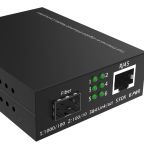
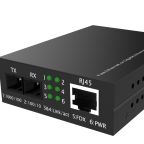
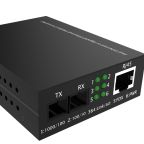
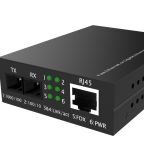
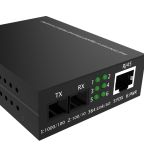
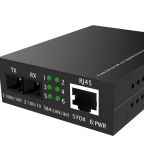
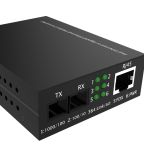
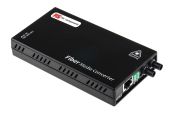
An Ethernet media converter is a networking device designed to interconnect incompatible physical media types to support Ethernet-compatible devices. The most common Ethernet media converter features two ports — an RJ45 copper port and a fibre optic port — enabling conversion between copper Category (CAT) or Unshielded Twisted Pair (UTP) cabling and single-mode or multi-mode fibre optic cabling.
Copper-based Ethernet connections using UTP cabling are limited to a maximum data transmission distance of 100 metres under standard IEEE 802.3 specifications. However, when converted to fibre, the link distance can be extended to several kilometres, with some industrial-grade media converters supporting distances up to 120 km or more, depending on fibre type and transceiver optics used.
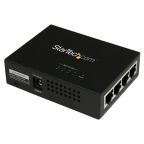
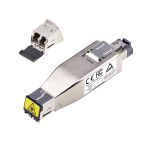
There are also media converters that support additional functions, such as converting Ethernet to VDSL, providing Power over Ethernet (PoE) passthrough, or accommodating SFP transceiver modules for flexible bandwidth and reach.
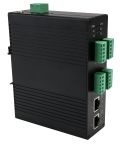
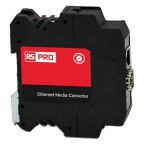
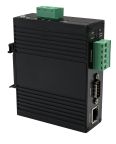
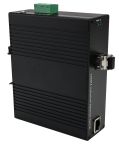
Most Ethernet media converters consist of a standalone chassis into which the different network cables are connected, but they can also be integrated as modular cards 19" rack systems or DIN rail cabinets for high-density installations. Media converters support link speeds from 10 Mbps up to 1000 Mbps (Gigabit Ethernet) and operate transparently at the physical layer to ensure seamless interoperability between legacy and modern network devices, which is a foundational requirement in industrial automation environments.
Benefits of Using Ethernet Media Converters
Ethernet media converters provide practical advantages that enhance network flexibility, reliability, and cost-effectiveness:
- Extended Network Reach: Convert copper Ethernet links to fibre to overcome the 100 m distance limitation of UTP cabling, enabling connections to remote devices or buildings.
- Improved Noise Immunity: Fibre-based connections are immune to electromagnetic interference (EMI) and radio frequency interference (RFI), making them essential for electrically noisy industrial or manufacturing environments.
- Flexible Network Integration: Media converters allow legacy copper devices to coexist with modern fibre infrastructure without replacing the entire network, supporting budget-friendly gradual upgrades.
- Cost-Effective Deployment: Avoid the high cost of replacing entire switches; media converters offer a modular way to add fibre capability only where it is needed.
Types of Ethernet to Fibre Converters
Ethernet to fibre media converters are categorised based conversion methodology, physical form factor, and deployment density. Selecting the correct variant is essential for achieving the required performance, reliability, and compatibility with system infrastructure.
By Conversion Type
Copper-to-Fibre Converters:
Copper-to-fibre converters are the most common media converters and are used to bridge copper Ethernet connections (10/100/1000BASE‑T) with optical fibre interfaces. They are frequently deployed to extend LAN reach to remote equipment located several kilometres away while providing immunity to electromagnetic interference (EMI).
Fibre-to-Fibre Converters:
Fibre-to-fibre converters adapt between different optical standards, such as multi-mode to single-mode, or shifting between different wavelengths. These are used where legacy optical infrastructure must interface with higher-performance or longer-reach fibre backbones.
Copper-to-VDSL / Other Variants:
Some specialised media converters extend Ethernet over existing twisted-pair telephone wires (VDSL) or coax cabling, often incorporating PoE support to power remote devices. These variants address specific deployment requirements where standard copper reaches are insufficient.
By Form Factor
Standalone Converters:
Standalone converters are compact, self-contained units powered by an external AC or DC power source. They are typically used for point-to-point links at the network edge to connect remote devices such as IP cameras, industrial controllers, or building network nodes to a central fibre backbone.
Chassis-Based Converters:
Chassis-based media converter systems consist of modular cards installed in a rack-mount or enclosure that provides centralised power and management. This design is suitable for high‑density installations, such as data centres or main distribution frames (MDFs), where multiple fibre runs must be aggregated and managed simultaneously.
Features and Capabilities of Ethernet Media Converters
Ethernet media converters available on RS support a range of link speeds to match varied network requirements. Most models handle speeds from 10 Mbps up to 1000 Mbps (Gigabit Ethernet), featuring auto-negotiation to automatically detect and match the speed of the connected devices.
Many converters also support features such as auto‑MDI/MDI‑X, duplex mode detection, and extended temperature ranges for industrial use, ensuring reliable operation across different environments. Ethernet media converters in the RS PRO range, for example, are often specified with wide operating temperature ratings and industrial‑grade components for demanding applications.
Applications of Ethernet Media Converters
Ethernet media converters are indispensable in environments where electrical noise, extreme distances, or diverse hardware platforms challenge standard networking protocols. By leveraging the galvanic isolation and high bandwidth of optical fibre, these devices ensure robust data backhaul across various critical sectors.
- Manufacturing & Automation: In smart manufacturing, media converters enable the integration of legacy CNC machinery and modern PLCs into a unified fibre backbone. This prevents ground loop issues and protects sensitive control data from the high levels of EMI generated by heavy-duty motors and variable frequency drives (VFDs).
- Healthcare Industries: In clinical settings, fibre conversion is utilised to provide electrical isolation between patient-facing medical imaging equipment and the primary hospital network. This ensures compliance with stringent safety standards while allowing high-resolution diagnostic data to be transmitted across campus-wide facilities without latency.
- Telecommunications Industries: Telecom providers utilise media converters to bridge the gap between subscriber copper-based equipment and high-speed fibre-to-the-premise (FTTP) backhaul. These devices allow for the cost-effective extension of Metro Ethernet services to business clients without requiring the replacement of existing customer-premises equipment (CPE).
- Transportation Industries: Within intelligent transportation systems (ITS), media converters are deployed in roadside cabinets to link traffic controllers and surveillance cameras to a central command centre. Their ability to withstand wide operating temperature ranges makes them ideal for outdoor deployments along highways and rail infrastructures.
Key Technical Specifications for Ethernet Media Converters
When selecting an Ethernet media converter, it is important to consider technical specifications that ensure compatibility, reliability, and optimal network performance:
- Supported Data Rates: Confirm that the media converter supports the required Ethernet speeds, whether 10/100/1000 Mbps (Gigabit Ethernet) or higher, for both copper and fibre interfaces. This prevents network bottlenecks and ensures seamless data transfer.
- Fibre Type and Connector: Choose a converter that matches your network’s fibre type — multi-mode for short distances or single-mode for long distances — and connector style, such as SC, ST, or LC, based on your design and distance requirements.
- Transmission Distance: Ensure the optics are rated for your specific span (e.g., 550m, 10km, or up to 120km).
- Duplex and Mode Support: Verify full-duplex operation and auto-negotiation capability to maximise throughput and minimise collisions by allowing simultaneous two-way traffic.
- Environmental Ratings: For industrial or outdoor deployments, select converters with extended operating temperature ranges, EMC compliance, and rugged IP-rated enclosures to withstand harsh conditions.
The Leading Supplier and Distributor of Ethernet Media Converters in Singapore
RS is a trusted partner for high-performance Ethernet media converters, providing robust solutions for complex industrial networking requirements. We maintain a comprehensive inventory of components from premier manufacturers such as Planet, StarTech.com, and Trendnet. Our portfolio encompasses a wide array of conversion speeds and interface types at competitive price points, ensuring your infrastructure benefits from reliable, low-latency connectivity.
In addition to media conversion hardware, we supply a full suite of networking and computing peripherals, including SFP modules and DIN rail power supplies, to ensure peak network efficiency and reliability. Secure your rack-mount converters, DIN rail media converters, or standalone units online today. For comprehensive information regarding our procurement process, lead times, and logistical services within Singapore, please visit our dedicated delivery information page.
Popular Searches
Related links
- RS PRO RS485 RS422 Ethernet Media Converter Full Duplex
- MOXA RS232 RS485 Ethernet Media Converter, 100Mbps
- Brainboxes RJ45 Ethernet Media Converter Ethernet Media Converter 10.1Gbps, Half Duplex
- Brainboxes RJ45 Ethernet Media Converter Ethernet Media Converter 100Mbps, Half Duplex
- Weidmüller RJ45 Ethernet Media Converter Ethernet Media Converter Full Duplex, Half Duplex 5 km
- Eaton Ethernet Ethernet Media Converter
- WAGO Ethernet Ethernet Media Converter 400 m
- RS PRO SFP Single Mode Half Duplex 10 km